



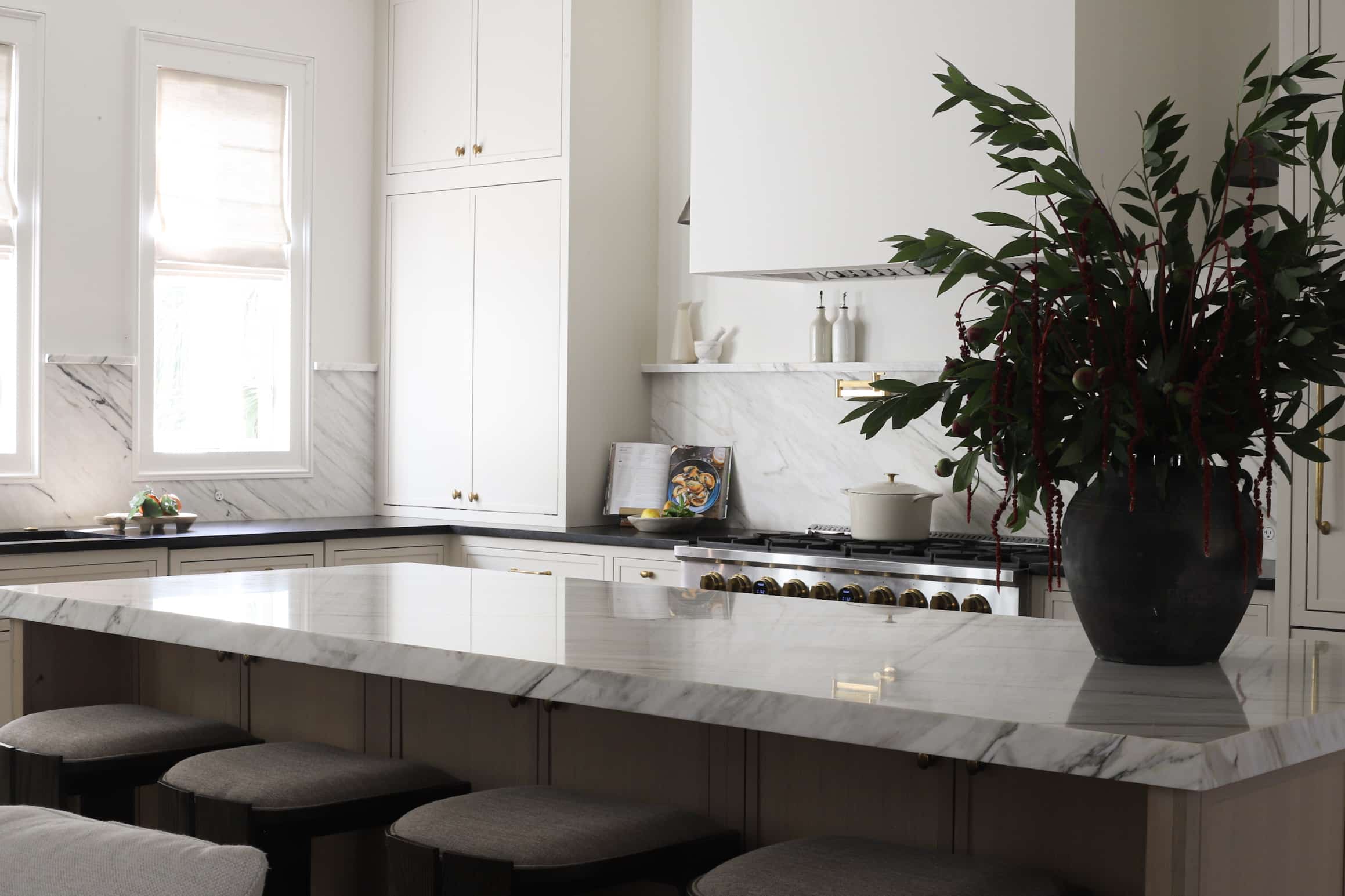
101 Kitchen Countertops: The Best Countertops for Your Home
One of the most paramount aspects of a house reconstruction or a new construction is represented by kitchen countertops. They are used all the time, cutting vegetables, spilling fluids, putting hot pots in, and even hasty meeting places of relatives and friends. They not only serve a functional purpose but have a significant impact on the overall design of the room, bringing together cabinets, appliances, back-splashes, and flooring into a unified look. Based on the knowledge of professionals, in detailed descriptions of the countertops, the broad range of materials, the strengths and weaknesses of different types of materials, their usefulness, and the innovative uses of these materials are explained. Be it remodelling on a budget, a low-maintenance luxury, or an eye on the latest trend in 2026, knowledge of these options will make sure that you choose what you would love in the next few decades.
Critical Considerations during Countertop Selection
To make an informed choice, it begins with the self-assessment. Enquire of yourself the intensity of your kitchen’s daily running. Frequent usage of hot cooking and acidic food requires clothes with resistance to heat and stains. Families with young children or pets are more concerned with the scratch resistance and easy cleaning properties, considering the possibility of inevitable accidents. Aesthetics alone do not dictate much, as does lifestyle.
Budget Facts and Intelligent Distribution
Prices lie in a wide range of laminates that cost less than $50/S.F. to high-quality natural slabs costing more than $150 per square foot. Proper measurements of your plan – of islands, peninsulas, or any long curves – avoid surprises. The cost of installation can further increase material costs by 30-50% when it involves complicated cuts in sinks or outlets. One such tactic is strategic mixing: use more expensive materials on focal points that customers can see, such as islands, and less expensive materials on perimeter counters. This will ensure that the maximum impact is realized without straining the bank.
Maintenance Requirements and Long-term care
Countertop maintenance is also very different. Natural stones are porous, and thus they need annual sealing to prevent stains, while engineered surfaces, which are non-porous and cannot be cleaned by wiping. Think of your degree of tolerance to routine operations–some of you love the process of oiling timber, and some of you like to be convenience-loving. The environment is also important; the warping of wood is faster in wet conditions, and when subjected to strong sunlight, some of the resins may fade away with time.
Aesthetic Fineness and Individuality
The countertops must fit in with your kitchen’s mood. The combination of neutral palettes and modern minimalism, warm colors and farmhouse comfort, and bold veining and modernity has been helpful in promoting the new spaces. The 2026 trends are to go more organic, warmer in texture, with less glossy perfection preference, and instead with rough and worn surfaces, such as leathered or polished surfaces in place of excessively polished ones. Sustainability is becoming a factor in decision-making, with preference given to responsibly sourced naturals or recycled composites.
Natural Stone: Selections
The natural stones offer unimaginable exclusivity, with each of the slabs narrating its geological history through its appearance and design.
Marble: the Luxury with Character and Perenniality
Marble countertops are made of limestone that has been subjected to metamorphosis and is veined beautifully in whites, grays, blacks, and sometimes pinks or greens. The classic ones, such as Carrara, will provide some drama, whereas Calacatta will be more dramatic. It has a high heat tolerance, enabling direct placement of hot pans on it, and because of its surface, it acquires a visibly desirable patina, unnoticeable wear, and is not subtractive. The finishes are smooth and sophisticated in looks, and the small scratches are more likely to be covered by the honed finishes than the glossy polished ones.
There are difficulties with porosity that cause rapid absorption of stains due to wine, coffee, or citrus; it is essential to clean it immediately. Acids cut into the surface, and it is not immediately attended to. Professional sealing is an annual protection that acts as an insulation, but is combined with bathroom stones to save money by some homeowners. Brittleness is a quality that needs expert fabrication to reduce cracking in the process of installation.
In traditional European, luxurious, or transitional kitchens, marble is used. Combine with dark cabinets to create a beautiful contrast with the pair of white Carrara or honed black marble on the islands to create a moody elegance. Carve marble pastry cuts into baking areas, or veins upwards as a full-height backsplash.
Granite: The Durability Matchless
Granite is an igneous rock that is extremely hard. Speckled or theatrically veined designs are available in a million colours, the neutrals of inconspicuousness, the exotics of rich blues or greens. Granite countertops can withstand heat without burning, it can resist damage due to day-to-day use, and it can resist etching by chemical cleaners.
Porosity requires topical periodical sealing, but it is much less imposing than marble. Interdependence on slabs matching enables the occurrence of seams; different patterns tend to conceal them spontaneously. Although hard, extreme effects may wear it out, but these are very rare.
Granite is the best in humming houses. Black gilded by the gold spot will give rich drama, gray shades will be in harmony with stainless appliances, and leathered finishes will become interesting to touch, but will not become slippery. Local quarried products will be sustainable and reduce transportation expenses.
Soapstone: Reticent and Repentant
The soapstone is rich in talc and is non-porous, which gives it a velvety touch, and will not be affected by stains, heat, or acid; no seal is needed. It is mostly gray in colour with faint hues of blue-green, and begins light and darkens with the use of mineral oils, forming a rich depth of colour.
The slab sizes are limited to up to seven feet and may have seams with expansive layouts. It is soft like granite, so it can be dented with massive force, yet flaws mix with such beauty.
Soapstone is appropriate for rustic, coastal, or minimalistic. Charcoal shades over ground cabin-style kitchens, blue tinges bring out sea serenity, and smooth built-in sinks bring out monolithic beauty. It is easy to maintain, and it is appreciated by people who prefer convenience to diversity.
Quartzite: The Natural Star on the Rise
Quartzite is a natural metamorphic stone and is often confused with quartz. It is harder than granite and has the appearance of marble with veins in it. Popular 2026 selections, such as Taj Mahal, have warm and golden colors with dull patterns. High-quality durability incorporates high heat and scratch resistance, and is less porous than marble.
An increase in the price and variation in slabs requires close selection. Fashion is inclined towards quartzite countertops as a true luxury without the maintenance of marble.
Quartzite is refined and elegant in the modern or organic design, particularly in warmer earth colors that are in line with the prevailing tastes.
Designed and Artificial Substitutes
Man-made and engineered ones are one of the most viable and innovative options, which can be used in the present-day kitchen. These materials are focused on being standardized in the looks, outstanding performance in daily stresses, and often have higher value than that of pure natural stones. They remove a large amount of variations present in quarried slabs but offer better resistance to typical kitchen risks and hazards such as stains, bacteria, and usage wear. These options still rule many installations in 2026 because of their integration of aesthetics, ease of maintenance, and suitability to the lives of many today, who require beauty, yet reliability.
Engineered Quartz: Reliability Redefined and Leading the Pack
Engineered quartz is also the best engineered countertop material that is produced by fusing approximately 90-95 percent crystals of natural quartz that are ground, with good-quality polymer resins, pigments, and binders. This material forms a non-porous surface that is very dense, repelling liquids, bacteria, and stains much better than most natural stones. Caesarstone, Silestone (by Cosentino), Cambria, MSI Surfaces, and others are leading brands with every slab being manufactured under tightly controlled factory conditions with a consistent pattern, color, and quality across the batch; there are no surprises like a highly unpredictable granite or marble.
The best thing is that it is low-maintenance. Quartz counter only needs regular wiping using mild soap and water, as opposed to porous naturals, which need to be sealed at least once a year. Constant spills – consider berry juice, coffee, red wine, or oil – can be cleaned with ease, and no residue will be left behind. Durability of quartz minerals in scratch resistance is high enough, making it ideal for chopping on the surface (however, cutting on a board is still a good habit to maintain the sharpness of knives). Heat tolerance is far greater than that of laminates, and it can tolerate moderately hot pots fairly well, although extreme direct heat of oven trays or skillets is the cause of possible scalding of resin, which trivets can effectively prevent.
Quartz is still reigning in 2026, usually mentioned in industry reports as owning a large percentage of new installations. The fashions have stressed designs that are more reminiscent of natural stone effects but lack the disadvantages–imagine the fancy marble-like veining in warm off-whites, warm grays, or golden-colored bases. Caesarstone Taj Royale or Calacatta Stillstorm or Silestone Eternal collections faking Carrara or Taj Mahal quartzite or concrete-textured Caesarstone Airy Concrete or Cloudburst Concrete are all popular examples. Matt finishes, and smooth finishes are becoming popular due to their ability to remain fingerprint-free and natural touch, whereas brighter colours make eclectic or playful kitchens livelier. Eco-friendly versions are made with recycled materials, which attracts environmentally friendly house owners.
There are still constraints, though. Installing resin-based products close to windows may lead to slight fading or yellowing of resins over time, should the direct sunlight be exposed to. Trivets should not be neglected, or the surface will be discolored or damaged by extreme heat. Although it is very resistant in general, it is not entirely resistant to heat like solid granite. The cost is considered mid-to-premium, which is frequently similar to good granite and more affordable than the exotic naturals.
Concrete: Customization of Statement-Making Kitchens Boldly.
Concrete countertops have unmatched creative freedom, developed out of a cement-based mixture poured either on the ground or cast in a mold to be shaped accurately. Everything is made to order, and fabricators can make it in all sizes, with straight edges or bullnose, ogee, or organic curves and implanted with a distressing amount of texture and sparkle: recycled glass, shells, pebbles, or metallic flecks. They can be smooth polished to a mirror finish, or rough honed, leathers, or stamped to resemble any other material.
Concrete that has been properly sealed has good heat resistance (hot pans are not a big concern), great scratch resistance as a result of daily use, and excellent impact resistance. Its industrial-chic design is perfectly projected into the modern, loft-style, or artistic kitchen, where the raw authenticity is used as a design value. With staining, it is possible to use earthly warm grays, mushroom, or darker tones that are consistent with the current trends of comfortable industrial appearance.
Disadvantages are that it will be more expensive, with an average of 65 to 135 and more per square foot installed, and it depends on complexity and precast or poured in place, which makes it a premium market like high-end quartz or natural stone. The heavy weight of the material (19-25 pounds per square foot is typical) would require reinforced cabinetry and occasionally support at the floor. Even sealed surfaces can accumulate patina or small cracks with time due to settling or thermal processes, and it is necessary to seal against any spillage. Repairs are usually patch repairs, and seamless repairs are more of an exception than the norm; total replacement is usually the norm when dealing with serious damage. Curing times have the effect of increasing fabrication timelines (up to 28 days to full strength).
Cozy and Eco-Friendly: Butcher Board to Welcome Feeling
Butcher block is a unique natural material and feels warm and cozy in a way that can never be compared to stone and engineered materials. These surfaces are made of hardwood, glued strips, most commonly maple, with tight grain and great durability, or walnut, with rich chocolate color; or oak, with its old-time strength, or cherry, birch, hickory, beech, or teak; in face-grain or end-grain (checkerboard pattern to enhance chopping strength).
The attractiveness lies in the softness of the floor, a lower level of noise, such as dishes not clanging so loudly, and durability. Scratches, cuts, or burns of minor significance are removed easily, and the surface is brought back to new. And of sufficient care, it lasts decades, and in most cases, undergoes a softening patina of character. Sustainability is bright when it is obtained through a responsible forest.
The maintenance should be performed on a regular basis: every month, food-grade mineral oil or bees wax mixtures should be applied to keep the wood moist, so it does not dry, crack, or even warp. Spill cleanup will prevent deep stains (when acids are used, in particular), and waterproof products can be resealed periodically to ensure it is dry in a damp climate. The heat needs trivets to scorch it, and too much exposure to water could lead to swelling or discoloration.
Butcher block is also experiencing a resurgence in 2026 as the homeowner desires the organic coziness of the stone in response to cooler trends. It is perfect in farmhouse, eclectic, rustic, or transitional kitchens -walnut islands with quartz or stone perimeters make available focal points, and end-grain sections make prep stations with knife-friendly durability and an oiled finish beautifully emphasize the beauty of natural grain. Combinations – ornamented quartz with wood on the edges – are functional and stylish.
Wrapping Up with Confidence
Your dreamy surface is created when the qualities of the material and your everyday routine, budget, attention to care, and preferred environment are combined. Natural stones offer real beauty, engineered offerings are effort-free in performance, and hybrids offer creativity. The landscape of 2026 In the cozier organics and enduring elegance, considered choice can make the kitchen not only workable, but also get a kind of inspiration–a place that goes with you.
Send Your Request to Find Your Countertop