



By the team at Eugene’s Marble & Granite — Charleston’s countertop fabricators and installers since 1995. With over 30 years of experience and more than 10,000 kitchens installed across the Charleston area, we know firsthand how local conditions shape which stones perform best in Lowcountry homes.
In This Post
Charleston is the kind of place where the architecture, the history, and even the light itself work together to make every design choice feel deeply personal.
Whether you live in a restored single house in Harleston Village, a new build on James Island, or a marsh-front home in Mount Pleasant, the stone you choose for your countertops will not look the same here as it does anywhere else in the country. This guide breaks down precisely what works and why, so you can make a confident decision that respects both the character of your home and the unique coastal setting of Charleston. If you are not sure where to start, How To Choose The Best Countertops For My Charleston Kitchen is a helpful first read.
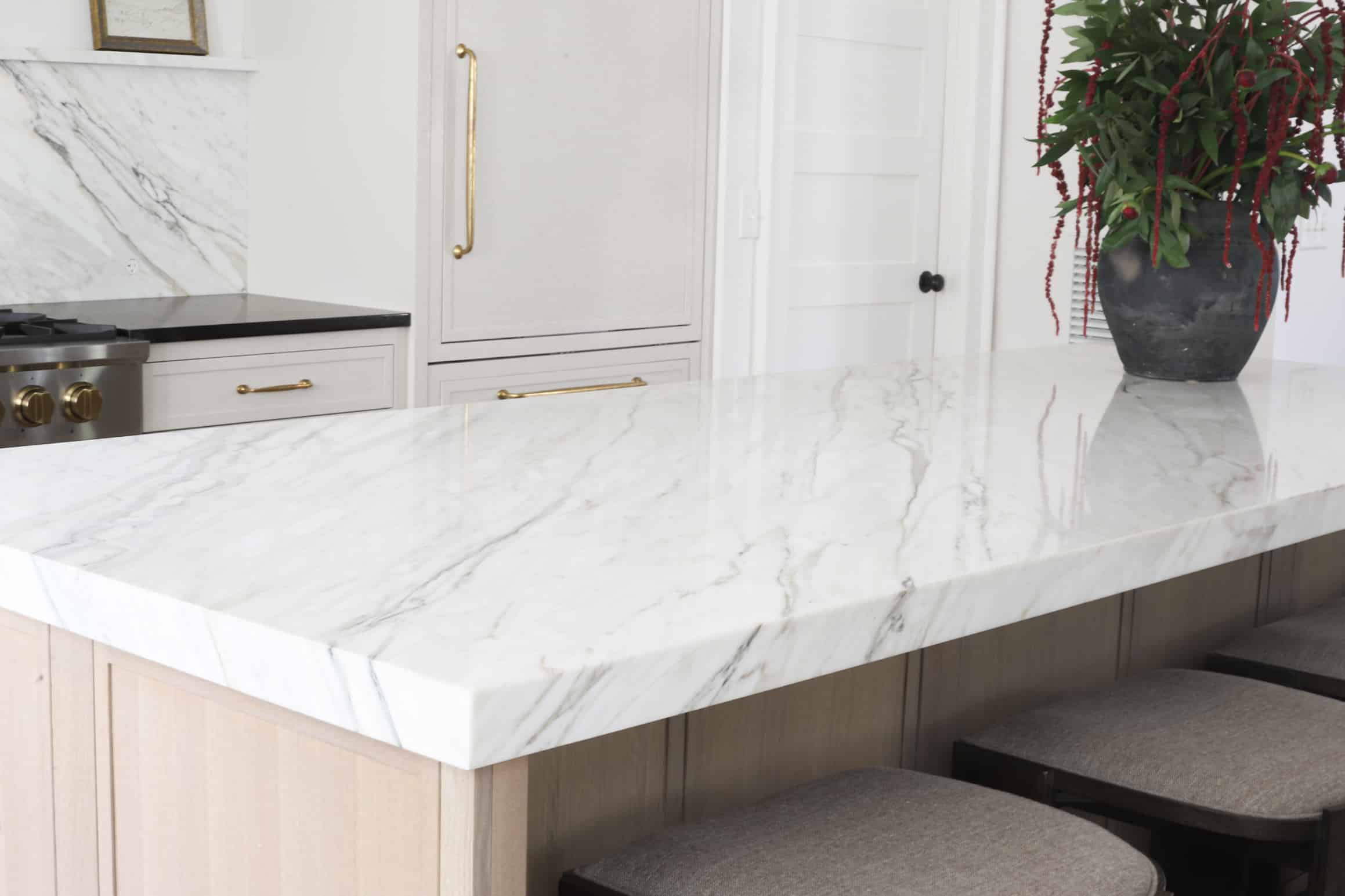
How Charleston’s Coastal Light Affects How Stone Looks in Your Home
Most homeowners choose a countertop slab in a showroom lit with flat fluorescent lights, then wonder why it looks completely different once installed. After fabricating and installing countertops in over 10,000 Charleston homes since 1995, this is one of the most common surprises we hear from customers. The gap between showroom and reality is especially wide in Charleston, because the light here is unlike anywhere else in the South.
Sitting at about 32 degrees latitude, the sunlight in Charleston is diffused, warm, and slightly golden for most of the year. In the late afternoon especially, light reflected off the water and the pale interiors of old houses produces an amber-colored glow that streams through windows. That warmth amplifies certain undertones in stone. The same countertop that appears crisp and cool gray in a showroom may, right before your eyes, shift to beige or taupe in your kitchen at 4 p.m. on a summer afternoon.
In practice, this means:
- Warm-toned stones look richer and more intentional. Cream marbles, honey-veined quartzites, and golden-flecked granites work with Charleston’s natural light rather than against it. White Macaubas quartzite, Golden Thunder granite, or any stone with movement in amber or caramel are among the stones most likely to shine in the Southern coastal light.
- Cool gray stones can shift in tone. Raw gray quartz or steel-colored granite can be striking in a showroom, but in a Charleston home with south or west-facing windows, those grays can take on a purple or lavender cast under certain lighting conditions. This is not necessarily a problem, and some designers appreciate it, but it is worth knowing in advance.
- High-gloss finishes increase reflections. A smooth counter surface will mirror the surroundings outside your home, whether tidal creek, marshland, or tree-lined streets, and shift in color throughout the day. A honed or leathered finish stays far more true to the actual color tone of the slab because it absorbs rather than reflects light.
- The lesson: Always ask for a sample to take home, live with it for a full day, and observe it in the morning, at midday, and in the afternoon before you commit.
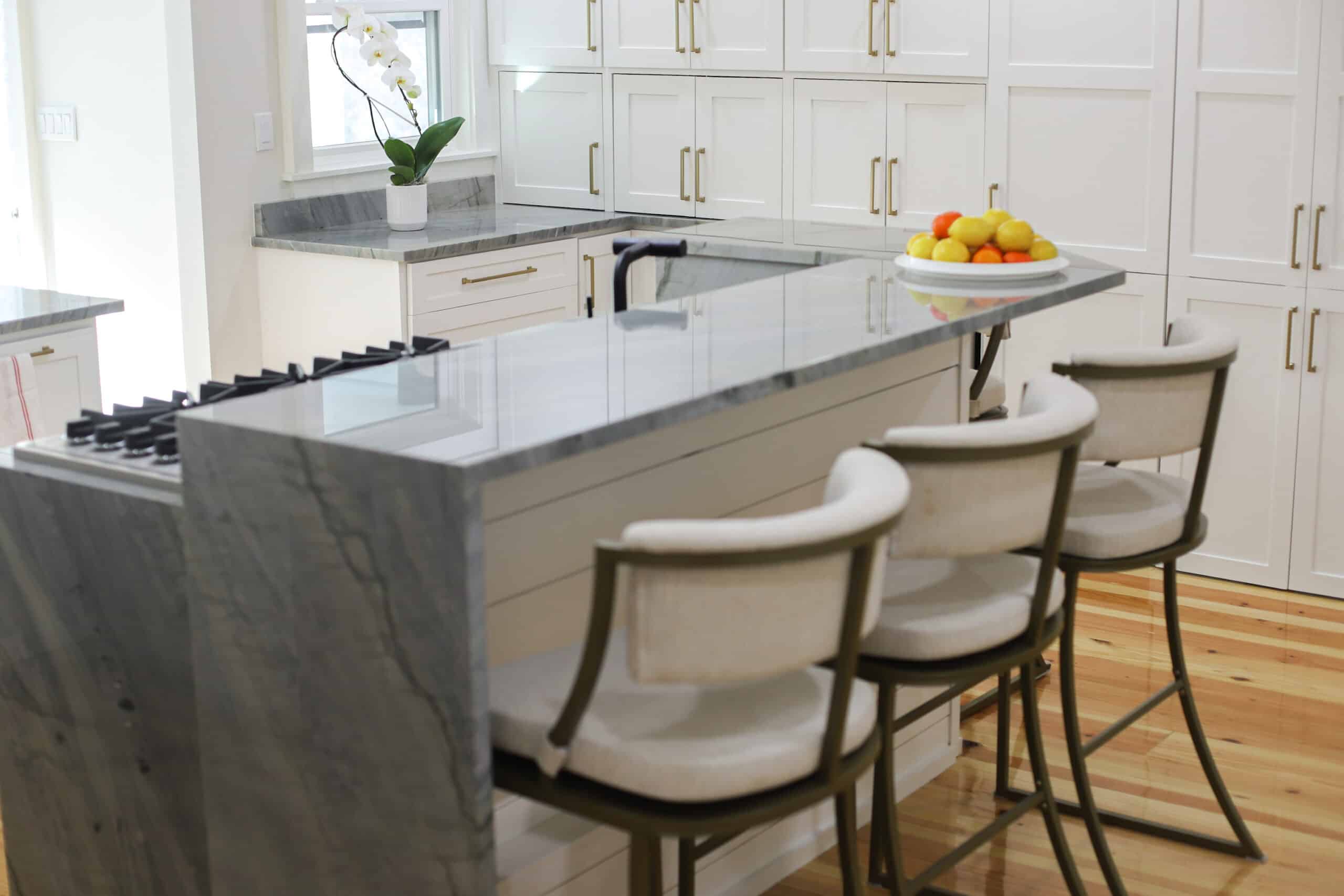
Best Countertop Colors for White Cabinets
It is no surprise that white cabinets dominate Charleston kitchens. They reflect light, open up smaller galley-style spaces, and pair naturally with the light, airy interiors that coastal living calls for.
The challenge is that white cabinets are neutral enough to work with almost anything, which can make the decision feel overwhelming. Here are the options that consistently perform best in Charleston homes.
- The most timeless choice is Calacatta-style marble or marble-look quartz. Heavy veining in gold or gray on a white ground creates a dramatic effect without competing with white cabinetry. It looks classic and glamorous, and the veining captures Charleston’s warm light in a way that feels natural rather than trendy. For low-maintenance households, a quality Calacatta quartz such as Cambria or MSI’s premium lines delivers the same look with far more resistance to etching and staining. See 7 Quartz Countertops Charleston Homeowners Love for top picks.
- White and cream granites such as Alaska White and Colonial White create a tone-on-tone effect that is elegant and calm. They work especially well in classic or farmhouse-style Charleston homes where unity rather than contrast is the goal. They are also forgiving; small chips tend to blend in. Browse granite countertops in Charleston to see available slabs.
- Soft blue-gray quartzite or quartz is gaining popularity in new coastal builds. A muted blue-gray engineered stone paired with white shaker cabinets creates a look that feels genuinely coastal without being kitschy. Natural quartzite also offers the added benefit of one-of-a-kind patterning, which appeals to Charleston’s appreciation for craftsmanship and individuality.
- What to avoid: Oversaturated countertops on white cabinets can look dramatic in photos but fall flat in person, especially in kitchens with limited natural light. If you prefer the contrast, balance it with light walls and warm wood elements like open shelving or a butcher block island.
Best Options for Dark and Navy Cabinets
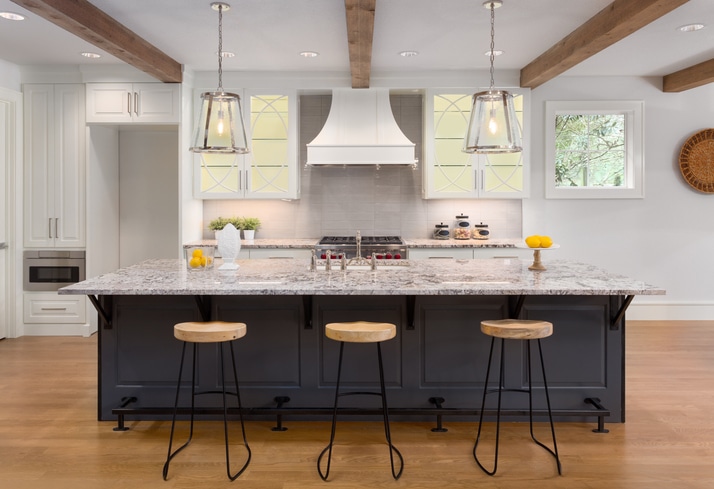
Dark cabinets swept through coastal communities a few years ago, and in Charleston, they have earned a lasting place. Colors like navy blue, forest green, charcoal, and deep slate complement the coastal palette and give the kitchen a grounded, sophisticated feel.
The best countertop options for these cabinets fall into two camps: bold contrast and quiet harmony.
- For bold contrast: White and cream stones look striking on dark cabinets. A marble slab, Super White quartzite, or clean white engineered quartz makes the space feel curated and photographs well, avoiding the heavy look that dark cabinetry can create. White also reflects light back into the space, which matters in kitchens where dark cabinetry absorbs much of the natural brightness.
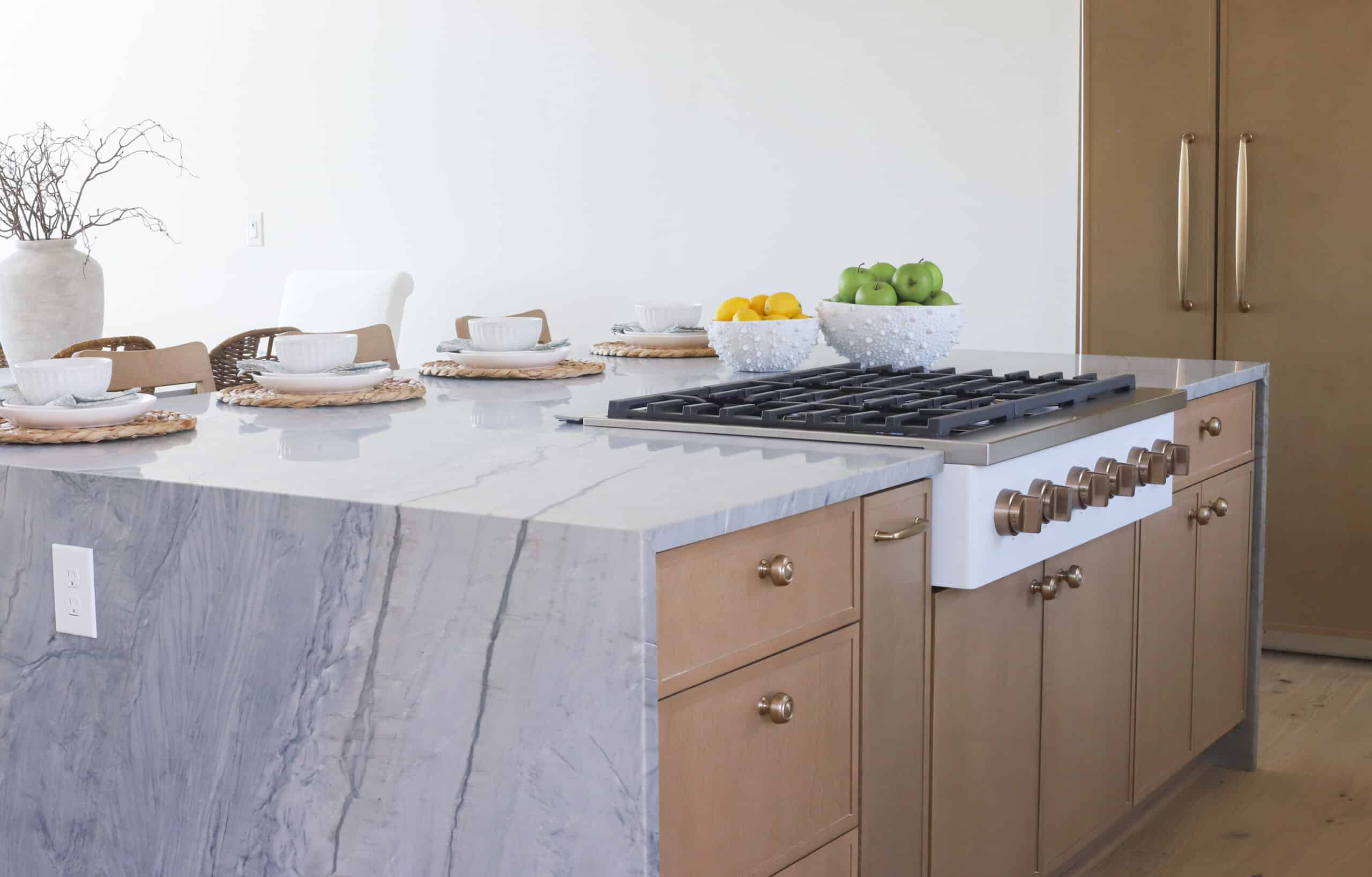
- For a harmonious, layered look: Medium-toned stones in the same color family as the cabinets create a sophisticated, intentional result. With navy cabinets, consider a gray-blue quartzite or a slab with silver and blue movement. With charcoal cabinetry, a soft white marble with dark veining ties the two surfaces together visually. This approach suits a more curated, design-forward interior.
- Waterfall edges and thick-profile slabs pair well with dark cabinets and reinforce the design statement. A 2 cm slab is standard; a 3 cm slab or a mitered waterfall edge elevates the countertop into an architectural feature.
- One practical note: With dark cabinets, fingerprints and water spots show more on a light countertop. A honed finish handles daily wear better than a polished one and still looks elegant.
Styles: What Stone Fits Each Design Aesthetic
Charleston kitchens rarely fit neatly into one style. The city’s design culture blends historic architecture, a seaside setting, Southern tradition, and a growing appetite for contemporary luxury. Here is how to match stone to each of the main aesthetics. For a broader look at what is trending, see 7 New 2026 Countertop Styles Entering the Charleston Market.
Coastal Style
Coastal Charleston kitchens lean toward natural surfaces, soft blues and greens, aged wood, and a sense of being close to the outdoors. The countertop should feel organic and unforced.
Best options: Pearl quartzite, Azul Macaubas quartzite, White Macaubas quartzite, or any natural stone with soft movement in blue-white or green-gray tones. A soft or leathered finish suits the relaxed coastal lifestyle better than a high-gloss polish. For more on what holds up best day to day, see Most Functional Kitchen Countertop in Charleston.
Farmhouse Style
Charleston farmhouse kitchens blend Southern character with the ease of a lived-in home. Think apron sinks, open shelving, shiplap walls, and antique-inspired fixtures. The countertop should feel substantial and full of character.
Best options: Honed Carrara marble in thick slabs (accepting that it will age over time and embracing that as part of its character), or a butcher block island paired with a durable quartz perimeter counter. Avoid overly polished engineered stone, as it can look too refined for a farmhouse aesthetic.
Contemporary and Modern Style
Newer construction in neighborhoods like Daniel Island and West Ashley increasingly favors clean lines, flat-front cabinetry, built-in appliances, and minimal hardware. The countertop needs to be architectural.
Best options: the bold, linear veining of Calacatta Gold quartz; an ultra-compact Dekton surface in soft whites or concrete tones; or a pure white engineered quartz with a waterfall edge. For a bolder statement, a dramatic black and gold slab can anchor the entire space. Portoro marble or high-contrast quartzites work well in this role.
High-End and Estate Style
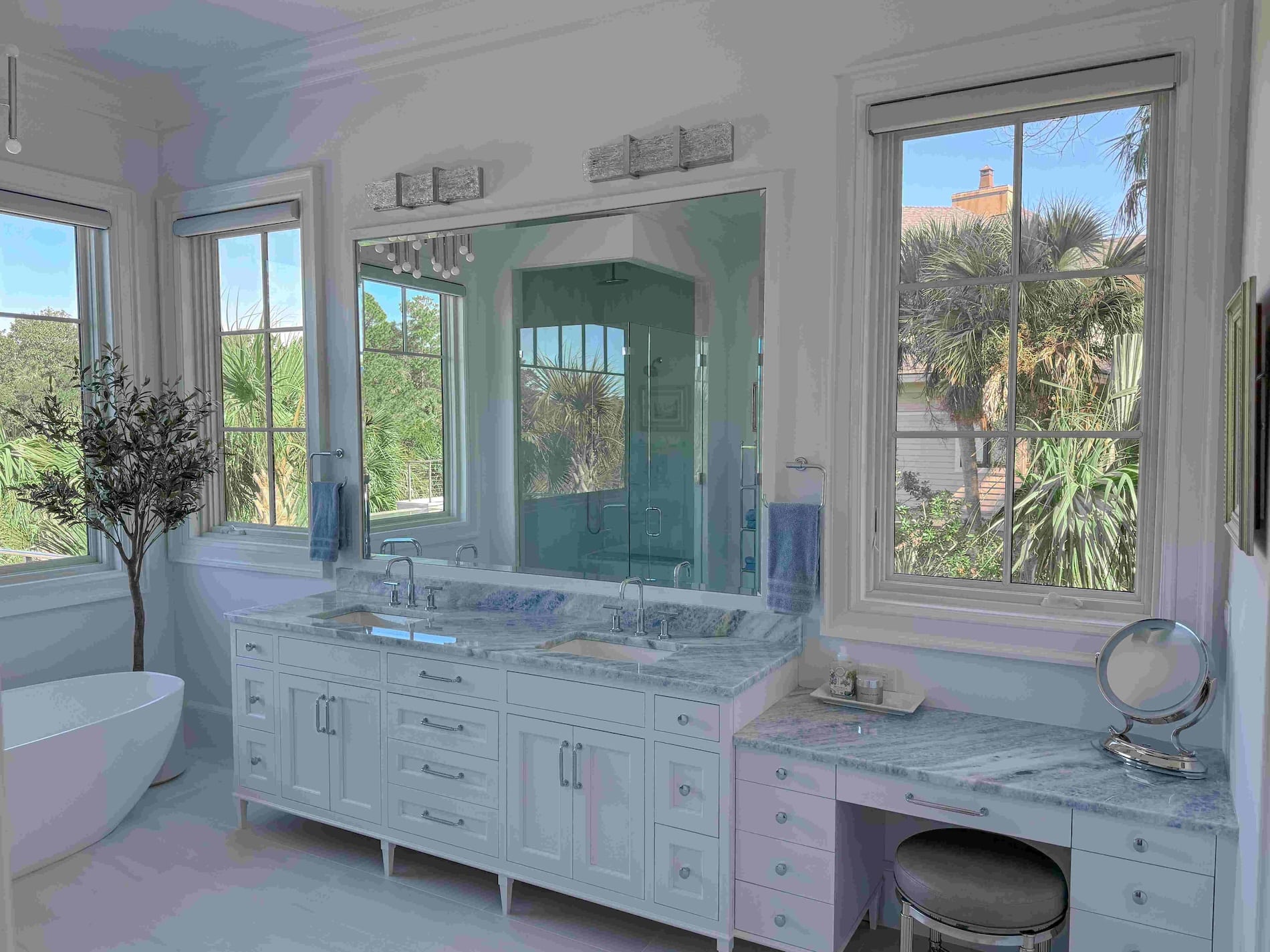
In large homes with formal entertaining kitchens, as found in high-end renovations throughout downtown Charleston and the Sea Islands, the countertop is a serious material investment and should look the part.
Best options: Book-matched slabs of Italian marble such as Calacatta Borghini or Statuario, exotic quartzites like Blue Fantastico or Patagonia, or a dramatically figured granite selected directly from the yard. Matching the kitchen countertop to a master bath vanity or butler pantry is what elevates the home to a true luxury level. See The Ultimate Guide to Buying Countertops in Charleston for material comparisons at every price point.
Frequently Asked Questions
Q: Can marble hold up in a busy Charleston kitchen, or is it high-maintenance?
Marble is softer and more porous than granite or quartzite, meaning it can etch (form dull spots) when it comes into contact with acidic substances like lemon juice, vinegar, or wine. It can also stain if not properly sealed. That said, many Charleston homeowners choose marble precisely because they want it to gain character with age, an effect designers call patina.
- If you cook frequently and want zero-fuss maintenance, a high-quality marble-look quartz gives you the appearance without the upkeep.
- If you appreciate the authenticity of natural stone and do not mind resealing periodically, marble can be a deeply rewarding choice.
For care and maintenance standards, the Marble Institute of America is the authoritative resource for natural stone.
Q: What countertop material holds up best in Charleston’s humid climate?
Humidity alone does not damage most natural stone countertops, as long as they are properly sealed and installed in well-ventilated spaces. Issues typically arise from standing water along edges and backsplash seams, which can degrade grout, caulk, and stone sealant over time.
- Quartzite and granite are naturally dense and handle moisture well.
- Engineered quartz is non-porous and requires no sealing at all, making it naturally resistant to moisture.
Whatever material you choose, make sure the installer uses quality silicone caulk at all wall and sink joints, and inspect them once a year.
Q: Which is better, quartzite or engineered quartz?
Both are strong choices. The right answer depends on your priorities.
- Quartzite is a natural stone with unique patterning and the authentic beauty that only millions of years of formation can produce. It requires regular sealing.
- Engineered quartz is made from crushed stone and resin, making it non-porous, consistent in appearance, and virtually maintenance-free.
Quartzite appeals to homeowners who value uniqueness and natural beauty; engineered quartz appeals to those who prioritize consistency and low maintenance. In Charleston’s short-term rental market, engineered quartz is usually the smarter choice given the high level of daily use. Browse quartzite countertops in Charleston to compare options. For kitchen design best practices, the National Kitchen and Bath Association (NKBA) is a trusted industry resource.
Q: What edge profile works best in a coastal Charleston home?
Edge profile is largely a personal choice, but some profiles suit a coastal setting better than others.
- Straight edge: clean, modern, the most common choice for engineered quartz.
- Beveled edge: adds subtle detail without being overdone.
- Ogee profile: ornate and traditional, beautiful in historic downtown homes but perhaps too formal for a relaxed beach cottage.
- Waterfall edge: where the stone continues down the side of the island to the floor, bold and architectural, works well in modern or high-end spaces.
- Rounded or pencil-rounded edge: the right call for most coastal Charleston kitchens. Simple, clean, and durable at the corners.
Q: What does countertop installation cost in Charleston?
Material costs vary widely.
- Prefabricated laminate: roughly $15 to $25 per square foot installed.
- Mid-grade granite and quartz: typically $55 to $85 per square foot installed.
- Premium quartzites, rare granites, and high-end marble: $90 to $200 or more per square foot, depending on origin, thickness, and edge profile.
Most Charleston kitchen countertop budgets fall between $4,000 and $9,000, depending on kitchen size. Getting a detailed itemized estimate before committing makes it easier to compare materials accurately. Request a free estimate to get accurate pricing for your project.
About the Author
This guide was written by the fabrication and design team at Eugene’s Marble & Granite, Charleston’s countertop specialists since 1995. Over more than 30 years and 10,000 kitchen installations across Charleston, Mount Pleasant, James Island, and the surrounding Lowcountry, we have developed deep expertise in what materials, colors, and finishes perform best in coastal South Carolina homes. Quartz is the most popular stone we install, followed closely by quartzite and granite. Our showroom is located at 4541 Savannah Hwy., Ravenel, SC 29470.
Ready to Find the Right Stone for Your Charleston Home?
Every slab is different, and no two Charleston homes share the same story. To find the right countertop for your space, nothing beats seeing the real stone in your own light, talking through your priorities with an expert, and getting an estimate that fits your project.
Request your free estimate at granite-marble-tops.com, bring samples home, live with them for a day, and let the light decide.