



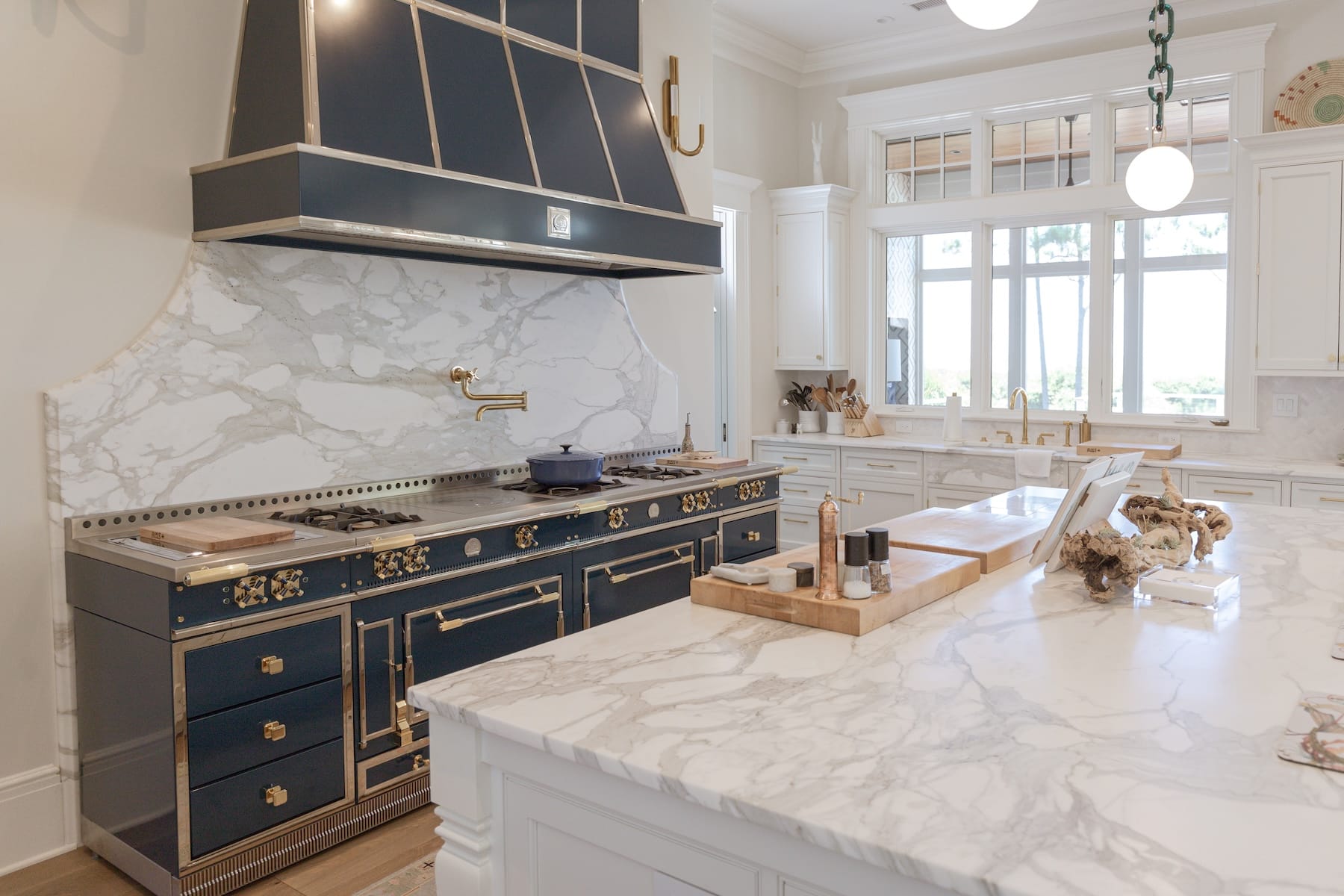
By the team at Eugene’s Marble & Granite — Charleston’s countertop fabricators and installers since 1995. With over 30 years of experience and more than 10,000 kitchens installed across the Charleston area, we know firsthand how local conditions shape which stones perform best in Lowcountry homes.
In This Post
Charleston is the kind of place where the architecture, the history, and even the light itself are all working together to make you feel that your design choices were very personal. You may reside in a refurbished single dwelling of Harleston Village, a new beach construction on James Island, or a marsh-front residence in Mount Pleasant, but the stone you use on your kitchen countertops in Charleston will not lead any life here that it will lead anywhere in the country. This guide is a breakdown of precisely what works and why, so that you can make a sure decision that respects the nature of the home as well as the unique coastal setting of Charleston. Whether you are drawn to coastal, farmhouse, or contemporary design, choosing the right countertop style for your Charleston home starts with understanding your light, your cabinets, and your lifestyle.
How Charleston’s Coastal Light Affects How Stone Looks in Your Home
The majority of homeowners choose a countertop slab in a showroom, which is illuminated with flat fluorescent lights, and then wonder why it appears totally different when it is installed. The distance between the showroom and reality is particularly broad in Charleston; however, the light here is unlike that anywhere in the South.
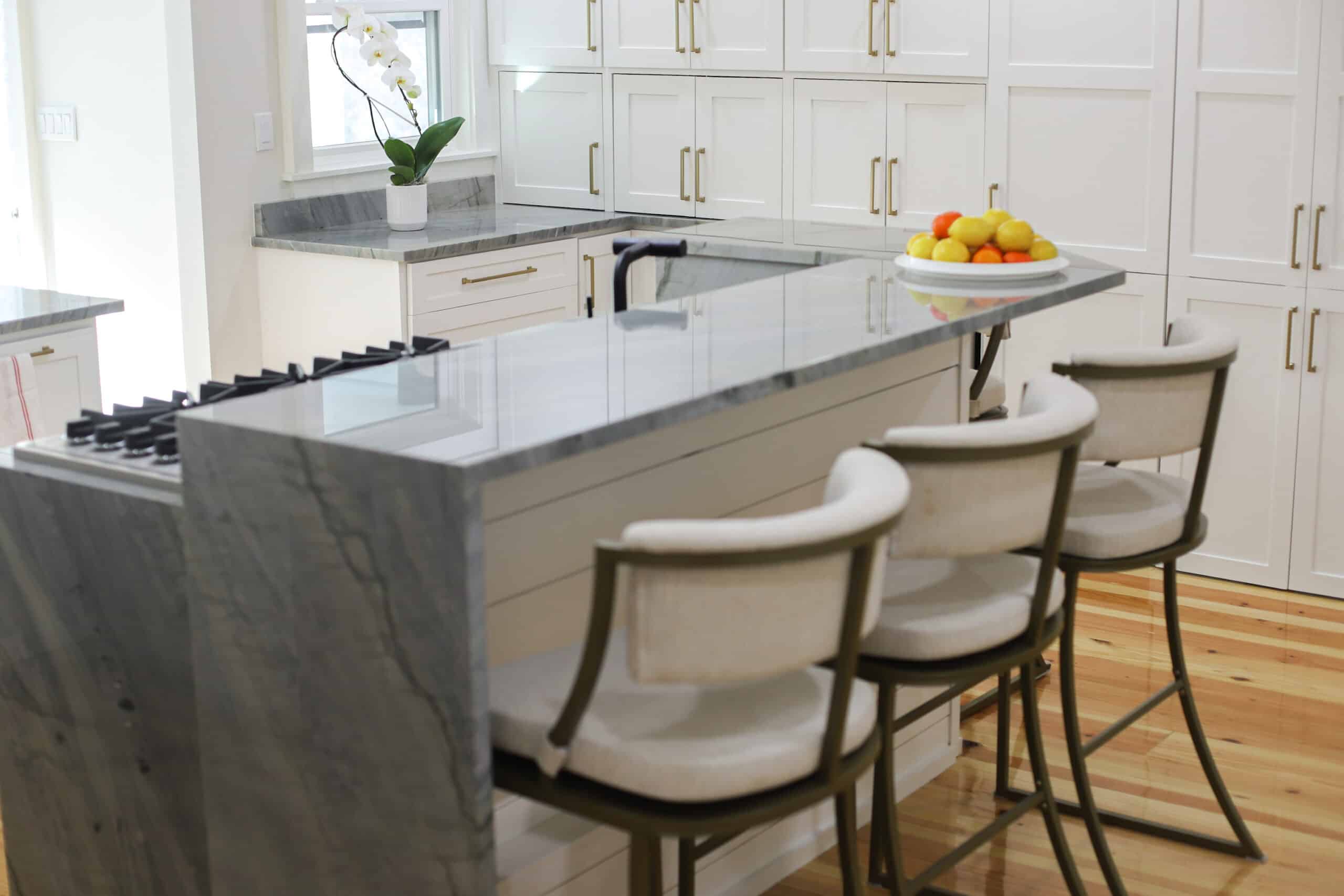
Charleston is near the coast, within about 32 degrees latitude, so that the sunlight is diffused and warm, and slightly golden most of the year. Later in the afternoon, and in particular, it seems, the light reflected on the water and the pale interiors of old houses, produces an amber-colored glow that streams into windows. That warmth increases some undertones of stone. The same countertop, which appears crisp and cool gray in a showroom, may, right before your eyes, turn into beige or taupe in your kitchen at 4 p.m. on a summer afternoon.
This comes to mean the following in practice:
- Stones that have warm tones appear more purposeful and wealthier. The cream marbles, honey-veined quartzites, and golden-flecked granites incline to the natural light of Charleston instead of struggling with it. White Macaubas quartzite, Golden Thunder granite, or any stone that moves in amber or caramel are some of the stones that are likely to shine in the light on the coast of Southern.
- Cold gray rocks are capable of moving. Raw gray quartz or a steel-coloured granite can be beautiful in a photography studio, but in a Charleston house, where there are south- or west-facing windows, those grays tend to assume a purple or lavender tint under certain types of lighting. Such is not an issue per se, and some designers are fond of it, but it must be taken into consideration.
- Reflections are increased by high-gloss finishes. A smooth counter surface will copy the outside surroundings of the home, with tidal creek, marshland, or tree-lined streets, and change color depending on the time of day. A polished or tanned finish is much more faithful to the real color tone of the slab since it does not reflect but takes in light.
- The lesson: It is always advisable to ask to be given a sample which you can take home, live with it a whole day, and watch it in the morning, in the middle of the day, and in the afternoon, before you commit.
Best Countertop Colors for White Cabinets
It is no wonder that the Charleston kitchens are dominated by white cabinets. They are light refractors, they enlarge smaller kitchen areas in the galley style, and they are naturally combined with the light and airy interiors that are required by the coastal lifestyle. The problem lies in the fact that white cabinets are neutral enough to go with almost anything, and, therefore, the decision may become overwhelming.
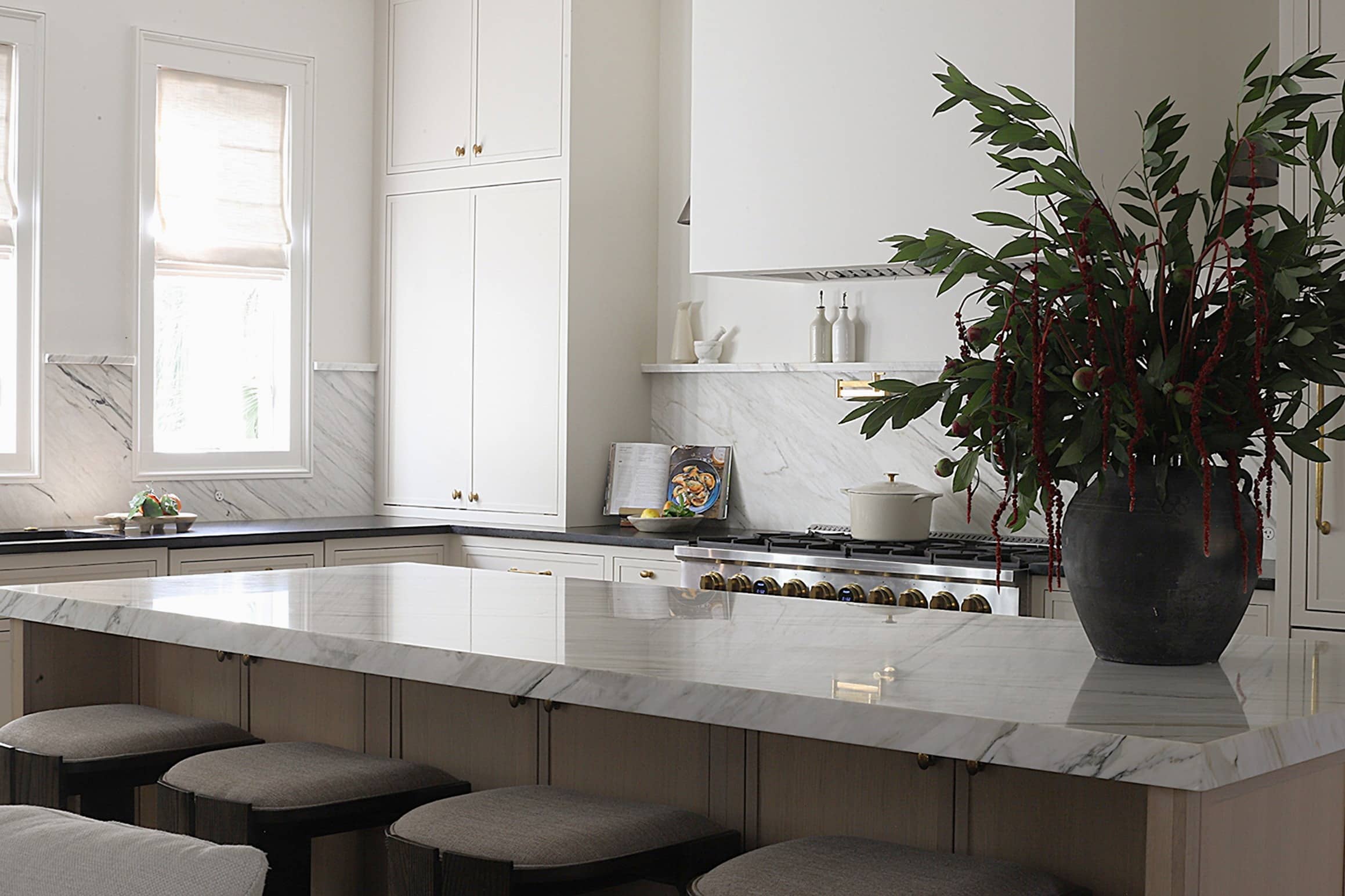
- The most eternal one is the Calacatta-style marble or marble-like quartz. The heavy veining done in either gold or gray on a white ground gives a dramatic effect without interfering with the white cabinetry. It looks vintage and glamorous, and the veining captures the warm light of Charleston in a manner that is natural, as opposed to being fashionable. In the case of low-maintenance households, a good Calacatta quartz (e.g., Cambria or MSI with their premium lines) will provide the appearance with significantly more etching and staining resistance.
- White and cream granites, soft, Alaska White, Colonial White; they give a tone-on-tone effect that is very elegant and serene. They are particularly effective in the more classic or farmhouse style Charleston houses, where one wants to create unanimity and not contrast. They are also lenient; tiny chips are likely to be lost. See our guide to granite countertops in Charleston for available options.
- New coastal constructions are becoming popular with soft blue-gray quartzite or quartz. An engineered stone of muted blue-gray and white shaker cabinets is used to make a look that is very coastal and not at all kitschy. Natural quartzite has the added advantage of unusual patterning too; no two slabs of it are the same, which is well received by Charleston, which values handiwork and distinctiveness.
- What to avoid: Oversaturated countertops on white cabinets may look dramatic in pictures, but pale in reality, especially in kitchens where there is no abundance of natural light. In case you like the contrast, it is possible to counterbalance with light walls and warm wood items such as open shelving or a butcher block island.
Best Options for Dark and Navy Cabinets
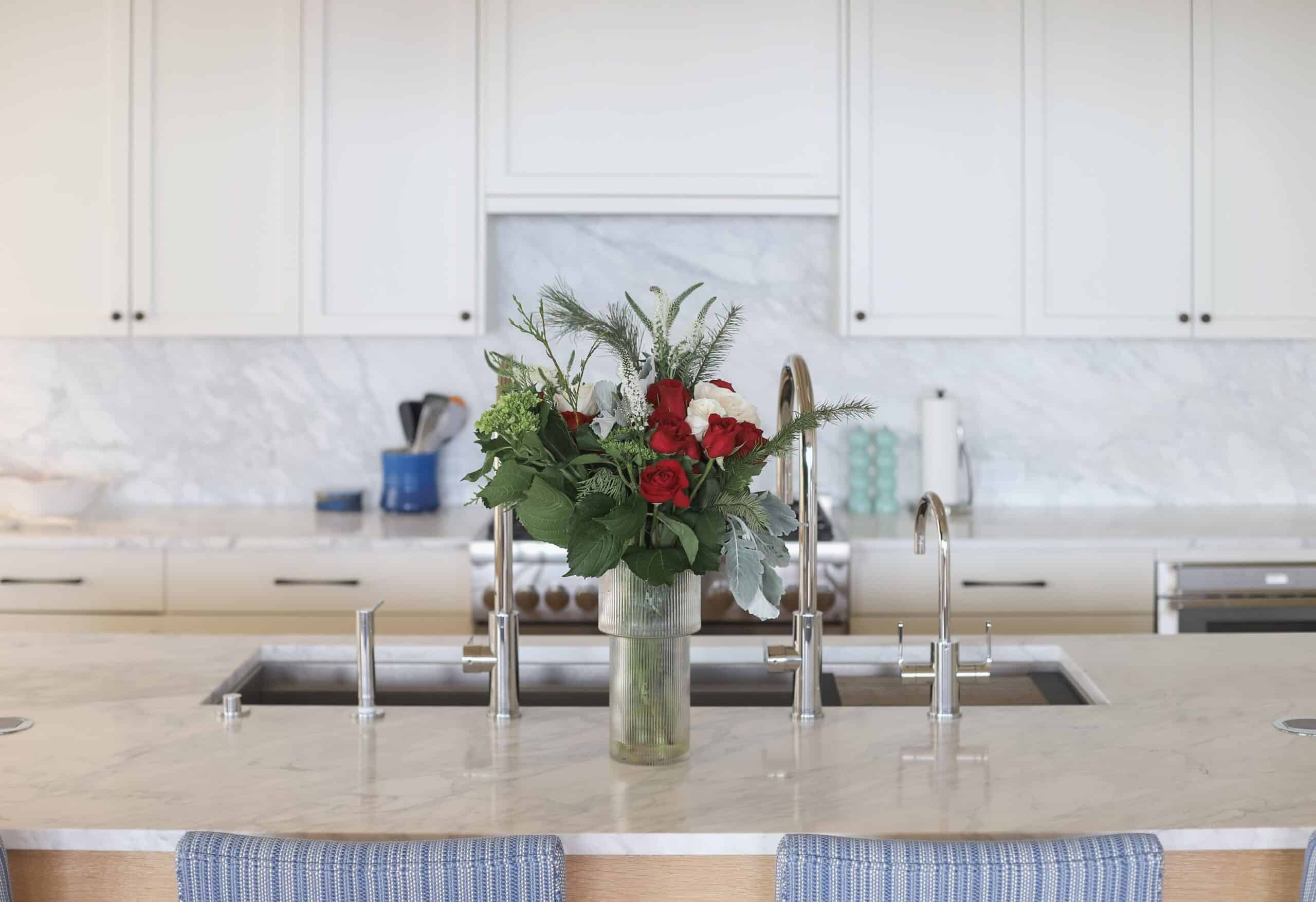
The dark cabinet school of thought was an epidemic in the coastal communities a couple of years ago, and in reality, it has earned its permanence in Charleston. The palette of the colors used in the kitchen (navy blue, forest green, charcoal, and deep slate) complements the coastal palette and provides a grounded and sophisticated impression to the kitchen. The best countertop options that can be used with these cabinets can be divided into two strategic camps, namely bright contrast and silent harmony.
- To be as contrasting as possible White and cream stones are beautiful on dark cabinets. A marble slab, Super White quartzite, or clean engineered white quartz countertops in Charleston makes the space feel editorial and photographs well, avoiding the weighted-down effect of a kitchen. The white is also reflecting the light back into the space, which is significant in the kitchens where dark cabinetry is taking away much of the room’s natural brightness.
- To a harmonious, layered appearance: Medium-toned stones that have the same color family as the cabinets provide a sophisticated and purposeful room. In the navy cabinets, a gray-blue quartzite or a silver and blue-movement slab should be considered. The two planes are co-visually united with charcoal cabinetry, which is a soft white marble with dark veins. This strategy is rewarding a more edited interior-design-focused strategy.
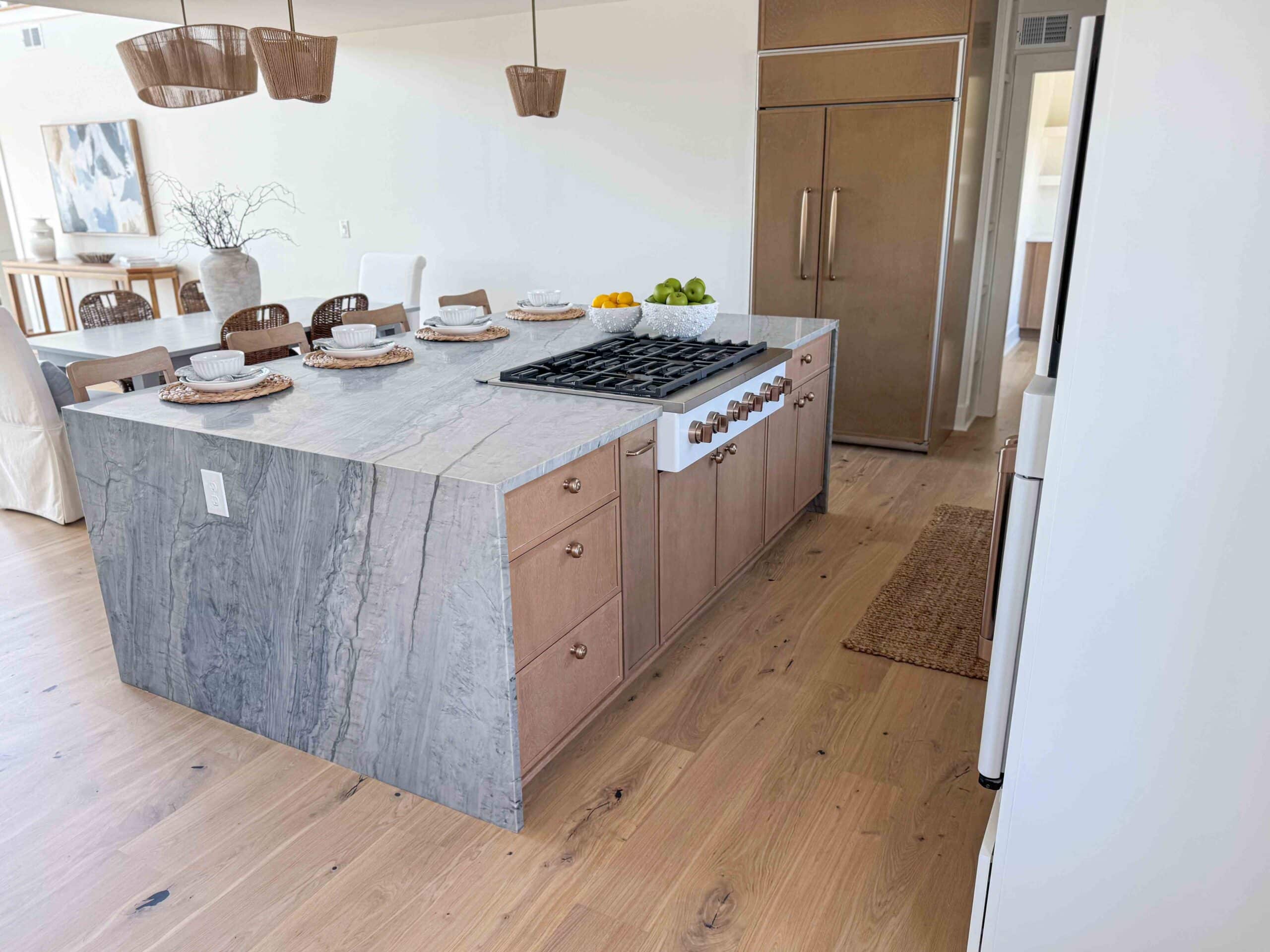
- Dark cabinets can be considered with waterfall edges and thick-profile slabs since they support the quality of the statement that the design makes. A 2 cm slab is considered standard; a 3 cm slab, or a mitered waterfall edge, will make the countertop an architectural feature. Read more in our guide to the most functional kitchen countertops in Charleston.
- One practical comment: When the cabinets are dark, the fingerprints and water spots become more visible on a light countertop. A refined finish covers the wear of daily use better than a polished finish and also appears elegant.
Styles: What Stone Fits Each Design Aesthetic
Charleston kitchens can hardly be limited to one style. The design culture of the city combines old architecture, seaside location, Southern culture, and an emerging desire for contemporary luxury. This is the way to fit stone with every prevailing aesthetic.
Coastal Style
The Charleston kitchens on the coastline lean towards the natural surfaces, the gentle blues and green, the aged wood, and the impression of being in proximity to the outdoors. The counter-top must be natural and natural.
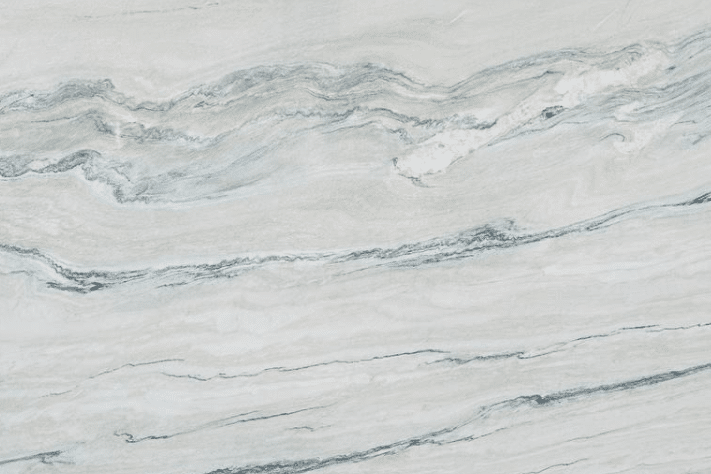
Best options: Pearl quartzite, Azul Macaubas quartzite, White Macaubas quartzite, or any natural stone that has soft movement in the blue-white or green-grey color. Super polished or leathered finishes are more consonant with the casual coastal lifestyle than high polished finishes.
Farmhouse Style
The Charleston farmhouses combine Southern culture with ease of home. There are apron sinks, open shelving, as well as shiplap walls and antique-inspired fittings. The countertop also needs to be muscular and one that tells stories.
Best options: Honed Carrara marble in thick slabs (jobbing the fact that it will age with time, but embracing that quality of it), butcher block island with a quartz countertop around the perimeter, durable. Too polished engineered stones should be avoided, as they may look too finished to be a farmhouse.
Contemporary and Modern Style
Newer constructions in such neighborhoods as Daniel Island and West Ashley are more and more in touch with clean lines, flat-front cabinet work, built-in appliances, and austere hardware. The countertop has to be architectural.
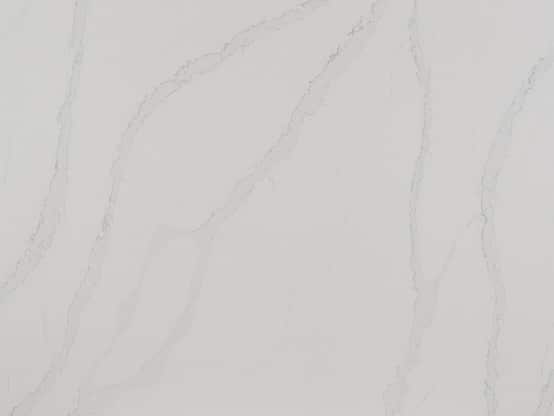
Best options: the bold and linear veins of Calacatta Gold quartz; the ultra-compact surface in Dekton in the soft whites or concrete colors; a pure white engineered quartz with a waterfall edge. To remind an unsuspecting modernist of the fact that this is actually contemporary, a floor and movement slab made of dramatic black and gold colors could be used as the center stage of the overall space – a good role could be taken by Portoro marble or high contrast quartzites.
High-End and Luxury Style
When the home size is large, there is formal entertaining kitchens, on the high-end renovations all around downtown Charleston and the Sea Islands, the counter top is an investment of serious material and should reflect it.
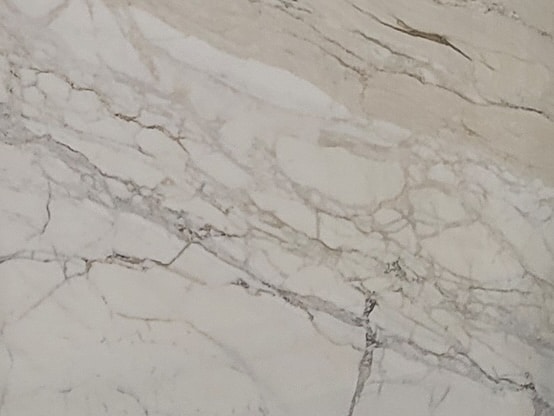
Better: Book-matched slabs of Italian marble, including Calacatta Borghini or Statuario; exotic quartzites, including Blue Fantastico or Patagonia; or a theatrically figured granite which the customer picks out of the yard. The correlation of the kitchen counter-top to a master bath vanity or butler pantry is what connects the house to the same plane as the definition of luxury.
For a full comparison of materials by durability and price, see our Ultimate Guide to Buying Countertops in Charleston and How to Choose the Best Countertops for Your Charleston Kitchen.
The National Kitchen & Bath Association (NKBA) recommends working with certified professionals when selecting and installing natural stone. For material care standards and technical guidelines, the Marble Institute of America is the industry’s authoritative resource.
Frequently Asked Questions
Can marble stand up in a busy Charleston kitchen, or is it high-maintenance?
Marble is easier to cut and also porous as compared to granite or quartzite, and hence it will cut (form dull spots) when it comes in contact with acidic products such as lemon juice, vinegar, or wine. It will also not be able to seal without being stained. However, there is an alternative reason why most Charleston house owners opt to use marble; it is due to their preference to see it gain character with age, an effect known by designers as a patina. Assuming that you cook a lot, use your kitchen a lot, and want zero-fuss maintenance, then a high-quality marble-ite quartz will provide you with the appearance but not the care. In case you are fond of the natural stone authenticity and are not opposed to resealing periodically, natural marble can be a very rewarding option. Learn more about how to maintain white countertops in Charleston.
What can you recommend as the countertop material in the humid climate of Charleston?
A humid environment does not cause most natural stone countertops to be damaged, provided that they are well sealed and installed in well-ventilated areas. The problems may be created by the long-standing water on the edges and back splashing sides, which, with time, can influence the grouts or caulk as well as the sealant of the stone. The naturally dense materials include quartzite and granite, which are effective in the management of moisture. The composition of engineered quartz is non-porous and does not need any seal whatsoever; it is naturally resistant to the infiltration of water. Whichever material you decide to use, see to it that the installer uses a good quality of silicone caulk in all the junctions of walls and sinks, and check them once a year.
Which is better, quartzite or quartz engineered stone?
Quartzite is a natural rock that has its own patterning coupled with the natural inimitable authenticity of the rock that is formed over millions of years. It has to be sealed on a regular basis. Engineered quartz is made out of crushed stone and a resin, and therefore is not porous, homogeneous, and requires no maintenance at all. Quartzite is a product that appeals to homeowners who are more focused on being unique and appreciating the beauty of nature; the engineered quartz appeals to those who are more focused on the consistency and low maintenance. Engineered quartz in the short-term rental market of Charleston is usually the smarter choice for longevity, given its high usage. See 7 quartz countertops Charleston homeowners love for specific recommendations.
What edge profile can be the most effective in a Charleston house by the seashores?
Edge profile is a rather personal preference, yet there are profiles that are more of a coast, as compared to others. A relaxed or straight line has a modern and clean feel, fits into modern kitchens, and is the most popular of the engineered quartz. A beveled edge is not overstated, and the detail is added. The ogee profile is old-fashioned and extravagant – pretty in old downtown houses, maybe too fancy for a lax beach cottage. A waterfall edge made of stone, prolonged on the side of the island to the floor, is bold and architectural; it can also be used in a modern and luxurious setting. To the majority of Charleston kitchens that are located on the coast, a rounded or pencil-rounded edge is the most appropriate: it is simple, clean, and sturdy at the corners.
What will be the cost of installing a countertop in the Charleston locality?
Several costs of materials differ. The cost of prefabricated laminate ranges approximately between 15-25 per square foot installed, and the most expensive mid-grade granite and quartz cost is between 55-85 per square foot installed. Leading quartzites, rare granites, and high-end slabs of marble can be priced between 90-200 or above per square foot, as per the sources, the thickness of the stones, and their edges. The average real cost budget of the majority of the Charleston kitchen renovations is realistically in the middle range of between 4,000 and 9,000 dollars, according to the size of the kitchen, for countertops. Having an itemized estimate in detail before committing helps in material comparison and makes accurate comparisons against each other. Request your free estimate here.
About Eugene’s Marble & Granite
Eugene’s Marble & Granite has been fabricating and installing countertops in the Charleston area since 1995. With over 30 years of experience and more than 10,000 kitchens installed, our team brings local knowledge and craftsmanship to every project. We serve Charleston, Mount Pleasant, James Island, Daniel Island, West Ashley, Summerville, and surrounding Lowcountry communities.
Ready to Find an Ideal Stone for Your Charleston House?
Each slab has a unique difference, and there are no two homes in Charleston that share so much of a person’s story. To identify the countertop to fit your space, nothing is better than seeing the real stone in your own light, discussing your priorities with the expert, and coming up with an estimate that fits your project.
Ask to have your free estimate at granite-marble-tops.com – get samples brought home, live a day with them, and let the light make up its mind.
Also worth reading:
- 15 Top 2026 Charleston Kitchen Countertop Trends
- Top Quartz Countertop Colors for 2026 in Charleston
- How to Select UV-Resistant Quartzite for Charleston Beach Houses